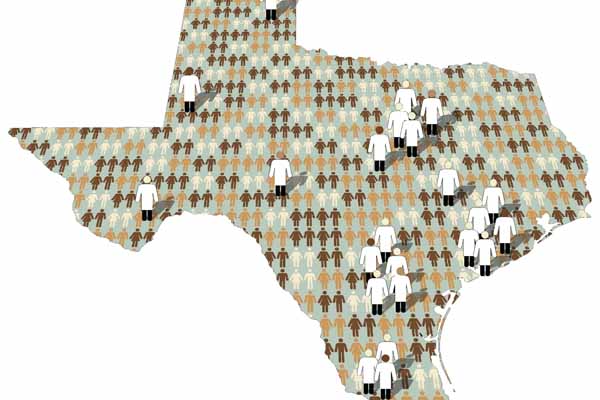
International medical graduates (IMGs) make up about a quarter of Texas’ physician workforce, considering both licensed physicians and residents. But a 2025 presidential proclamation requiring a new $100,000 fee for H-1B work visa applicants, followed by a Jan. 27 freeze by Gov. Greg Abbott on new petitions by state universities and agencies, could squeeze this crucial pipeline in meeting the state's health care needs.
The Texas Medical Association is investigating the moves, which also could threaten a new Texas law allowing IMGs to secure two new types of licenses to practice in the state. The H-1B nonimmigrant visa program enables U.S. employers to hire foreign-born professionals for specialty occupations, including health care, typically requiring at least a bachelor’s degree.
TMA President Jayesh “Jay” Shah, MD, says IMGs represent a significant contribution to Texas’ physician workforce and expressed “grave concerns” the H1-B visa interruptions could harm recruitment and access to care, as well as hinder the potential for the new law to help “rural and underserved areas that may be able to take advantage of hiring these physicians and who are ready to serve and ready to work.”
TMA is supportive of the American Medical Association’s efforts to exempt physicians from the new H-1B visa application fee requirement, which applies to all petitions as of Sept. 21, 2025. As of this writing, an Oct. 3 lawsuit challenging the presidential order was pending in the U.S. District Court of the Northern District of California.
AMA’s letter to Secretary of the Department of Homeland Security Kristi Noem noted a clause in the proclamation allowing fee waivers for certain workers or occupations if it “is in the national interest and does not pose a threat to the security or welfare of the United States.”
“As you establish standards to define categories of H-1B workers covered by this exception, we urge you to clarify that all physicians, including medical residents, fellows, researchers, and those working in nonclinical settings, are critical to our national interest,” the Sept. 25, 2025 letter said.
“The U.S. health care workforce relies upon physicians from other countries to provide high-quality and accessible patient care,” the letter points out, calling for the fee waiver “so that H-1B physicians can continue to be a pipeline that provides health care to U.S. patients.”
IMGs comprise 23% of licensed physicians in the U.S. per 2024 data from the Federation of State Medical Boards. About 26% of the 75,000-plus physicians in Texas are IMGs, per Texas Medical Board data from January, and 22% of Texas medical residents are IMGs, according to the Association of American Medical Colleges.
“It’s a major concern for all of us,” said Rajeev Suri, MD, professor and chair of the department of radiology at UT Health San Antonio Long School of Medicine and chair of TMA’s IMG Section. The section has been in communication with its AMA counterpart upon learning of the new fee.
The IMG pipeline is important for addressing future projected physician workforce shortages as well as present needs, and some residents provide health care to Texans in designated health professional shortage areas, he says.
TMA also is monitoring the impact of the state’s petition freeze as IMGs considering residency training or practice in Texas now have to weigh these factors into their decision-making.
Hospitals statewide are particularly reliant on residents, TMA staff also note, as they work up to 80 hours a week and can work even more under certain exceptions. Replacing residents with advanced practice registered nurse or physician assistants would cost hospitals more, according to TMA research, likely requiring two nonphysician practitioners to fill in for one resident, potentially creating staffing shortages, heavier caseloads for teaching faculty, greater costs, and subsequent access-to-care concerns.
NOTICE: The Texas Medical Association provides this information with the express understanding that 1) no attorney-client relationship exists, 2) neither TMA nor its attorneys are engaged in providing legal advice, and 3) the information is of a general character. This is not a substitute for the advice of an attorney. While effort is made to ensure that content is complete, accurate, and timely, TMA cannot guarantee the accuracy and totality of the information contained in this publication and assumes no legal responsibility for loss or damages resulting from the use of this content. You should not rely on this information when dealing with personal legal matters; rather legal advice from retained legal counsel should be sought. This information is provided as a commentary on legal issues and is not intended to provide advice on any specific legal matter. Certain links provided with this information connect to websites maintained by third parties. TMA has no control over these websites or the information, goods, or services provided by third parties. TMA shall have no liability for any use or reliance by a user on these third-party websites.
Amy Lynn Sorrel
Associate Vice President, Editorial Strategy & Programming
Division of Communications and Marketing
(512) 370-1384
Phil West
Associate Editor
(512) 370-1394
phil.west[at]texmed[dot]org

Phil West is a writer and editor whose publications include the Los Angeles Times, Seattle Times, Austin American-Statesman, and San Antonio Express-News. He earned a BA in journalism from the University of Washington and an MFA from the University of Texas at Austin’s James A. Michener Center for Writers. He lives in Austin with his wife, children, and a trio of free-spirited dogs.