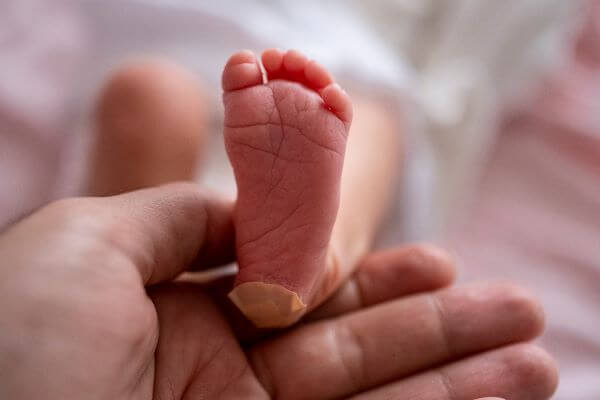
The Texas Newborn Screening (NBS) Program requires collection of two specimens from each newborn. The first screen requires blood from the newborn’s heel collected at 24 to 48 hours of age. The second specimen collection is at 7 to 14 days, a minimum of 168 hours, of age. The state’s public health laboratory analyzes the specimens.
As of 2025, the Texas Department of State Health Services (DSHS) laboratory screens for over 55 conditions using dried blood spot specimens. (Texas hospitals and birthing facilities must screen for congenital hearing loss and critical congenital heart disease.) For details, refer to the latest list of disorders on the Texas Newborn Screening panel.
Effective January 1, 2026, the cost of paid NBS kits increased from $68.63 to $94.81. The purpose of the increase is to support the addition of new conditions to the DSHS NBS panel, to support increased operational costs, and to expand courier services for newborn screening submissions. The HCPCS code for billing the newborn screening kit is S3620.
As a reminder, the Texas NBS Program also includes newborn hearing screening and Critical Congenital Heart Disease (CCHD) screening. The newborn hearing screen should be completed before an infant is discharged from their birth facility. CCHD screening is recommended at 24 hours of life. New recommendations as of 2025 regarding the algorithm and reporting form are available on the Texas NBS website.
For frequently asked questions about the newborn screening program, refer to the state lab’s FAQs on specimen collection and billing. TMA members who experience billing and coding problems can submit complaints to the Reimbursement Review and Resolution Service or contact the TMA Knowledge Center at (800) 880-7955.
Storage and Use of Dried Blood Spots after Newborn Screening
By Texas law (Health & Safety Code Sec. 33.018 (b)-(c)), DSHS retains the residual blood spots for up to two years and may use them during that time. The DSHS NBS Laboratory keeps residual blood spots in a secure place. DSHS NBS Laboratory will destroy the residual blood spots within two years unless the parent or guardian allows otherwise.
Uses within the two years include:
- Ensuring DSHS newborn screening tests, equipment and supplies are working correctly.
- Developing new tests for newborn screening
- Studying diseases that affect public health as allowed by law
If the parent or guardian selects OK on the Storage and Use of Newborn Screening Blood Spots form, DSHS NBS Laboratory will store the residual blood spots safely for up to 25 years, and researchers may use them for public health research outside of DSHS. This research may include the study of public health problems such as cancer, birth defects, or other diseases. Regardless of the parent’s choice, DSHS will NOT release any information that can identify them or their child outside of DSHS without additional parental written consent. View the data use policy and a list of research uses that have been allowed by DSHS.
DSHS storage of residual blood spots is governed by Texas law. All blood spots are stored for up to 2 years and then destroyed unless the parent submits a completed Storage and Use of Newborn Screening Blood Spots Form allowing for longer storage.
Additional Resources
DSHS maintains a website with the latest instructions, training videos, and clinical information related to newborn screening.
ACT Sheets – Action plans for all disorders that include immediate steps for physicians.